Origin
One mine. One province. One salt.
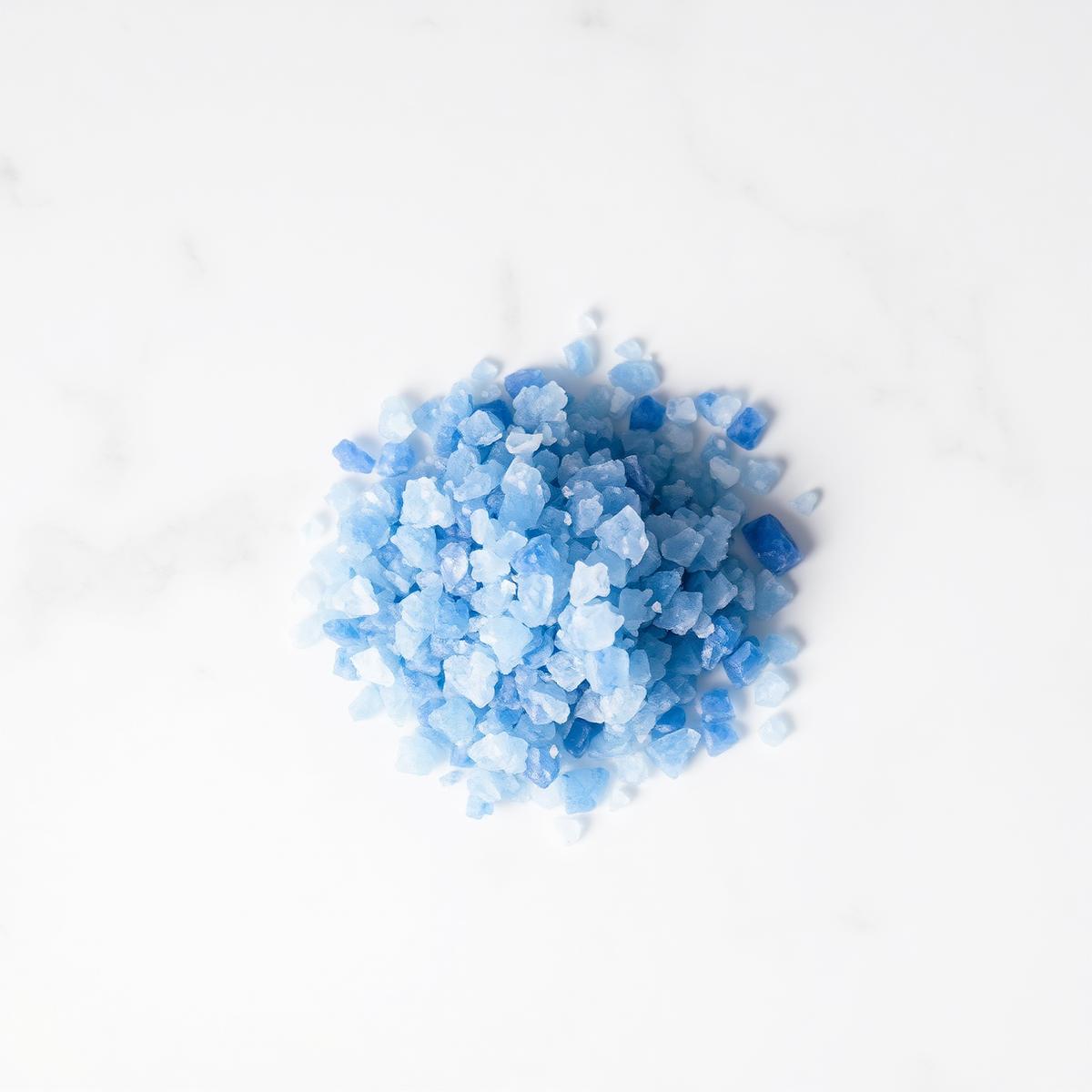
In the foothills of the Alborz mountains, in a province most people outside Iran have never heard of, there is a single salt deposit unlike any other on earth. The crystals are streaked with a deep, glassy blue — the color of a clear lake at dusk, or the inside of a sapphire held up to light. This is where Cyrus Blue comes from. Nowhere else.
A fossil of an ancient sea
More than a hundred million years ago, the land that is now northern Iran lay beneath a warm, shallow sea. Over time, the sea evaporated. What it left behind — pressed under the weight of mountains forming above it — is the salt we mine today.
The blue color isn't a mineral or a dye. It's a trick of geology. Under enormous pressure, the salt's crystal lattice fractures in a particular way, and light bends through compressed sylvinite the way it bends through sapphire or sea ice. Nothing has been added. Nothing has been done to it. The color is simply what happened when the earth squeezed an ocean for a hundred million years.
There are perhaps three places in the world where blue salt has been documented. Only one — Semnan, Iran — is edible. Only one is mined for the table.
Hand-tools, not heavy machinery
We work directly with the families who have hand-mined this deposit for generations. The salt is lifted in irregular blocks by hand, then sorted, broken, and graded the way it has been for centuries. No drilling rigs. No chemical processing. No middlemen rebranding bulk product as boutique.
Most "Persian blue salt" on the market today passes through three or four sets of hands before it reaches a label. Ours doesn't. We buy directly from the source, ship it in raw form, and bottle it ourselves. That's not a marketing claim. It's just how we set the company up.
Why we started this
Salt is the most overlooked ingredient in most kitchens. It's also the one that, more than any other, decides whether a dish lands or doesn't. We started Cyrus Blue because we believe the salt at the end of cooking — the pinch you reach for just before serving — deserves more thought than it usually gets.
A pinch of something that was pressed under a mountain for a hundred million years, on a dish you made tonight. That's the whole pitch.
Cyrus
We named the company after Cyrus the Great, founder of the first Persian empire — a leader remembered, even by his enemies, for refinement, restraint, and a sense of fairness that traveled with his trade routes across the ancient world.
Salt traveled those same routes. So did the cultures that valued it. We liked the idea of a name that pointed back to that — to a tradition of moving rare and beautiful things carefully, from one table to another.
That's what we're trying to do.